Louis Vuitton Spring–Summer 2026: Online Collection Presentation Analysis

In London yesterday was +17 — a clear reminder that spring is almost here. New collections are arriving in stores. Today we’ll look at how the SS2026 collection is presented online at Louis Vuitton.
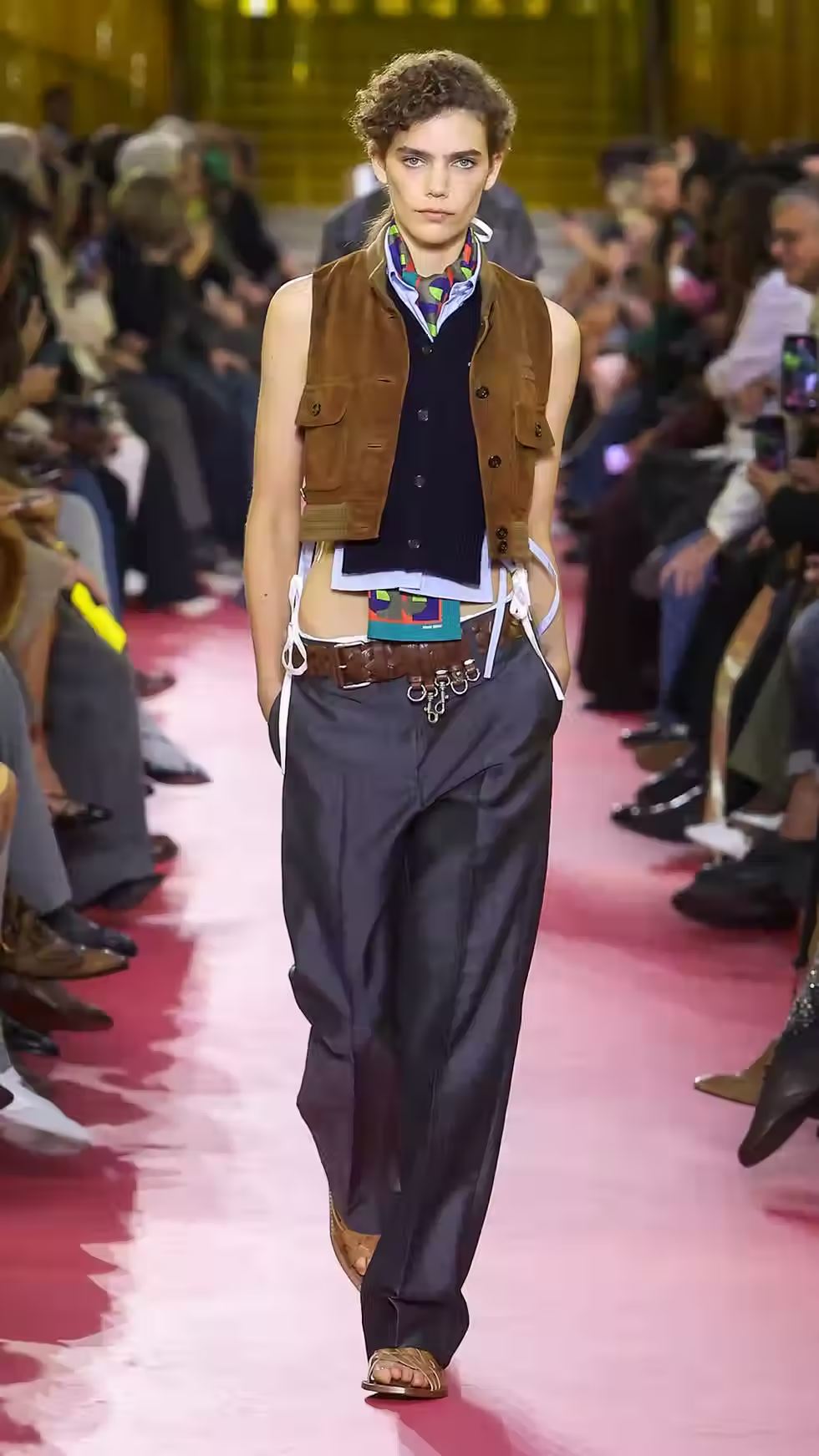
I rewatched the Louis Vuitton runway show to gain a more thorough perspective, and without doubt it is one of my favourite collections of the season — both in its artistic perception and its translation into actual offering. While there remains a visible, though somewhat diluted, line connecting the looks, the runway styling itself is difficult to digest. The layering makes it challenging to distinguish individual pieces and mentally integrate them into real wardrobes, which rarely exist as total looks.
The footwear added further distraction: rather than complementing and strengthening the outfits, it functioned almost as a separate exhibit. Curiously that many runway pieces have landed in the online store largely unchanged, while the assortment itself has been complemented by familiar brand classics.
Presenting a product online is not merely a set of product cards. Each industry has its own specifics, and in luxury fashion the key element — beyond technical execution — is the incorporation of heritage and storytelling, expressed not only through text but through visual language.
The initial task after LV runway show is therefore clear: to translate the visual language of the collection into an online environment so that a piece is not only admired like a museum object, but also desired for purchase — while taking into account the brand’s particular features:
primarily an accessories-driven brand, with RTW functioning as a decorative extension (not my words, Bernard Arnault said so);
a single platform presenting fundamentally different categories, from bags to ready-to-wear to beauty.
With this context in mind, I checked the page on the official website presenting the collection.

COLLECTION PAGE STRUCTURE
On the collection page — which we will review — Louis Vuitton continues the theme of the show. At the top of the page, a short introduction links to a separate campaign page featuring long-standing ambassador Jennifer Connelly. The campaign page, in turn, links back to the collection.
This is an excellent technique: it avoids overloading the interface while creating a closed interaction loop and a coherent online client journey.
What works well on the collection page
1. Editorial integration within the product grid
Campaign visuals are directly integrated into the product listing, interrupting the grid with proportionally larger images and videos. This helps maintain attention without fatigue while introducing narrative context, increasing the likelihood of conversion.

The campaign itself continues the declared theme — embracing the home as a sanctuary of life — but in a more relaxed and accessible interpretation. Considering the scale of the brand and the diversity of its audience, this softer approach is commercially logical. The conceptual line remains present but not dominant; the brand is primarily selling product supported by awareness rather than concept alone.
At the same time, editorial visuals do not overload the page, although in some cases their proportions could be slightly reduced relative to product imagery.
2. Balanced category presence
Products from different universes are relatively well distributed:
clothing (51/43%)
shoes (10/8%)
bags (32/27%)
accessories (18/15%)
perfume and beauty (12/10%)
The brand not only introduces new pieces but complements them with existing offerings, creating a complete universe and subtly reactivating interest in permanent collections.
3. Presence of focal points
Campaign imagery acts as entry points that lead directly to product pages, supporting exploration.
What pulls conversion down
1. Grid sequencing disrupts outfit logic
Products appear in an order that breaks natural styling progression.
Example: bag — sweater — eyeshadow — necklace
A more intuitive sequence would be: sweater — trousers or skirt — bag — shoes or jewellery.
Grid sequencing directly affects cognitive ease. Instead of being guided through looks and encouraged toward cross- or upsell, the client must independently navigate between unrelated items.

2. Lack of visible outfit completeness
Many RTW pieces exist as coordinated sets, yet this is not clearly communicated. For example, a client is encouraged to purchase a denim jacket with a fragrance, sneakers, and a bag. Meanwhile, on the page there are jeans and a top made of the same denim.
Many clients do not necessarily buy full looks — but those inclined to do so must first understand that a set exists, and this requires deliberate visual reinforcement.

3. Disproportionate product scaling
Certain items dominate attention unintentionally because of product imaginary scale. Smaller accessories appear visually larger than RTW or bags, shifting focus away from higher-value products.
4. Narrative disruption through misaligned links
Some campaign images lead to products unrelated to what is shown — for example, an image directing to a red lipstick that is not featured at all. This creates friction and potential irritation.
Technical shortcomings
inconsistent filter hierarchy
mismatch between filter names and the site’s Universe menu
absence of sorting functionality.
Product pages — the main weakness
Positive aspects:
generally strong photography quality (though resolution decreases when zoomed);
presence of descriptive copy, which could benefit from a more storytelling-oriented luxury tone.
However:
1. Lack of model imagery
Especially problematic given LV’s often complex silhouettes. Even simple garments behave differently depending on cut and fabric — something difficult to understand without seeing the item worn.
2. Limited viewing angles
Where model imagery exists, it often shows only one perspective.
3. Underused runway context
Runway content (which already exists) is not leveraged to reinforce product desirability or explain design intention.
4. Absence of cross-sell and upsell logic
Despite the collection’s reliance on complementary looks, product pages do not suggest related items, leaving additional sales potential unrealised.
Luxury e-commerce today is not only about presenting products beautifully. It's also not a generic product grid with the clear intention to sell. It is a mix of both, guiding clients through a coherent narrative where storytelling, navigation, and merchandising work together to transform admiration into purchase. Did LV manage to accomplish this task? Partially, but could be better.